
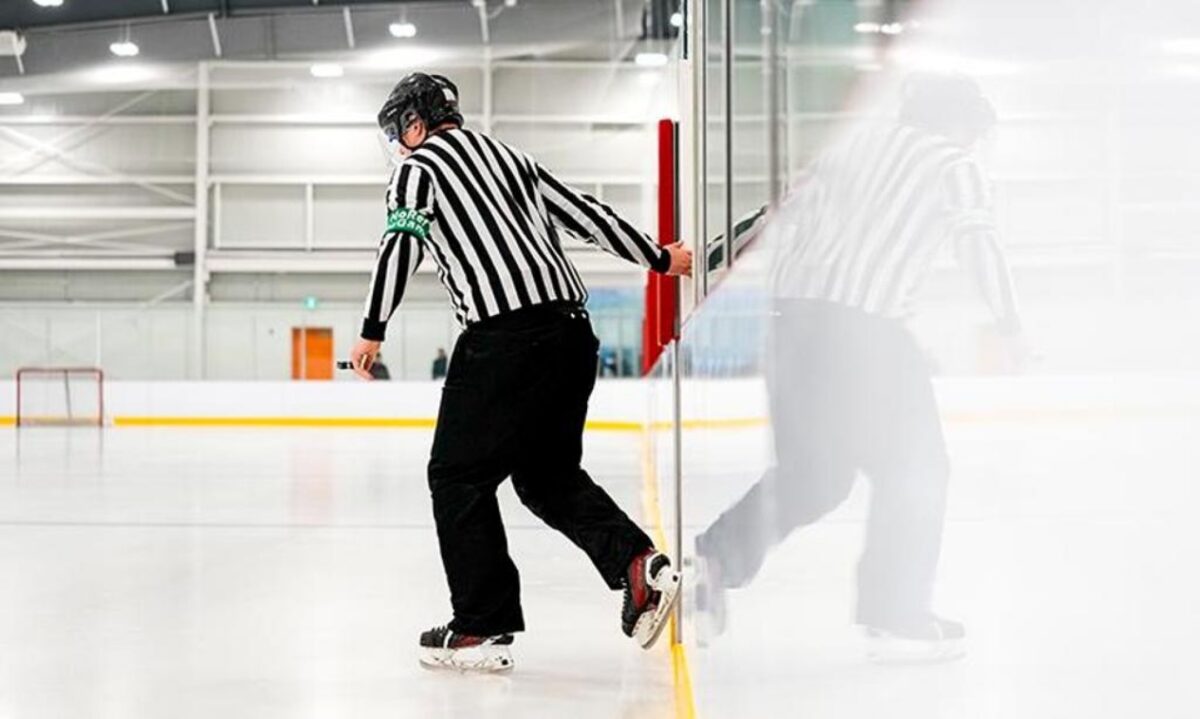
With thousands of players and coaches returning to the rink in preparation for the new hockey season, this is also an important time for Officials to get up to speed on the latest rule changes and areas of emphasis. Consistency in how the game is called remains an important part of creating a safe, fair and positive environment for everyone involved.
What’s changed from Hockey Canada? There are new player safety rules, updated penalty procedures and officiating mechanics. Some of these are significant rule changes, while others are intended to provide greater clarity and consistency in how the rules are interpreted and applied across the country.
For players and coaches, understanding these changes is just as important. Knowing what Officials are looking for can help teams adjust to the updated rules, avoid unnecessary penalties and keep the focus on playing the game.
Hockey Canada has created a video series explaining each of these rule changes in more detail.
Rule 6.18 – Goaltender Safety (U13 and Below Only)
When a puck strikes a goaltender’s mask or helmet, Officials must stop play as soon as it is safe to do so, while still allowing for a direct deflection into the goal before blowing the whistle. This new rule reinforces concussion awareness and player safety.
Rule 4.2 b) – Minor Penalties
Officials must now consider delayed minor and bench minor penalties when determining whether a penalty terminates after a goal.
Rule 6.9 – High-Sticking the Puck
The rule itself hasn’t changed, however, the standards for judging goals have been clarified:
- Shoulder height determines illegal contact during the play
- Crossbar height determines whether a goal is legal
Rule 10.8 – Refusing to Start Play
The procedure for refusing to start play has also changed. The previous two-minute warning has been removed. Officials now follow a clear progression: A bench minor, or a penalty shot in the final two minutes or anytime in overtime. Teams would then have an opportunity to comply. If they don’t, a game misconduct is issued to the head coach and the game is forfeited.
Rule 6.1 g) – Change of Players (U18 AAA Only)
When the net has been accidentally dislodged by any defending player, including the goaltender, this will result in a no change situation.
Officials Signals
Several officiating terms and signals have been added or updated this season:
- For all levels of hockey, when a linesperson blows a whistle for icing, they will put their arm up to signal it.
- The signal for slewfooting has also changed. Instead of a forward to backward motion, officials will now signal from backwards to forwards. The tripping and clipping signal, though remain unchanged.
Proper Helmet Fit – 2026–27 Point of Emphasis
It is not enough for a player to simply be wearing the required equipment. Officials must also recognize when that equipment is not fitted or worn correctly.
The acronym SNUG is used to help officials remember what to look for:
S – Snug fit on the head
N – No tilt
U – Up-close cage
G – Good and tight chinstrap
Officials must follow procedure when a helmet or facial protector is worn incorrectly, including issuing a team warning, assessing a misconduct penalty for a subsequent violation, and ensuring the equipment is properly adjusted before the player returns.


